Table of contents
What is Rising Sea Levels?
Survive rising sea levels, and you will avoid one of the catastrophic consequences of Climate Change, with frightening implications for coastal cities.
As the world’s oceans heat up, the water temperature rises, including deep ocean warming. This increases the water volume, because warm water expands and because warmer waters are causing the melting of glaciers and polar ice. This increase in sea temperature increases the average sea level, in turn increasing the climate risk for coastal councils.
Climate Change
With significant levels of sea level rise now baked into the system, it is more important than ever to make greater emissions reductions to limit climate change. If we stop fossil fuel use we can stop sea levels rising any more than what is now unavoidable (due to past emissions).
Moreover, there will be more ice loss from global warming, including from the melting glaciers and sea ice. Indeed, current accelerated melting in Greenland and west Antarctica will in turn see ocean warming and rapid sea level rise. This will increase the rate of rise leading to coastal inundation of low-lying property and widespread coastal flooding.
Rising Sea Levels in Australia
Long-term observations from sites like Fort Denison (Sydney Harbour) and Fremantle (Western Australia) confirm a steady rise in sea levels. However, the rate varies across the country:
- Northern Australia is experiencing a faster increase (4–6 mm/year) due to local ocean currents and tidal patterns.
- South-eastern regions are seeing a slightly slower rise (2–4 mm/year).
Satellite altimetry, which tracks sea level changes across entire ocean basins – supports the tide gauge data. These readings also indicate an accelerating rate of sea level rise around Australia.
Global mean sea levels rose by 21–24 centimetres in the period from 1880 and 2020. Science tells us the rate of sea-level rise is now increasing at a much faster rate, as a result of the greenhouse effect.
What are the 3 Causes of Sea Level Rise?
The cause of the ‘anthropogenic climate change’ that is driving sea-level rise is human behaviour in burning fossil fuels. The big three fossil fuels are coal, oil, and natural gas.
Deforestation to create land for the agribusiness industry has also been a leading driver of climate change.
Why is Rising Sea Levels Bad?
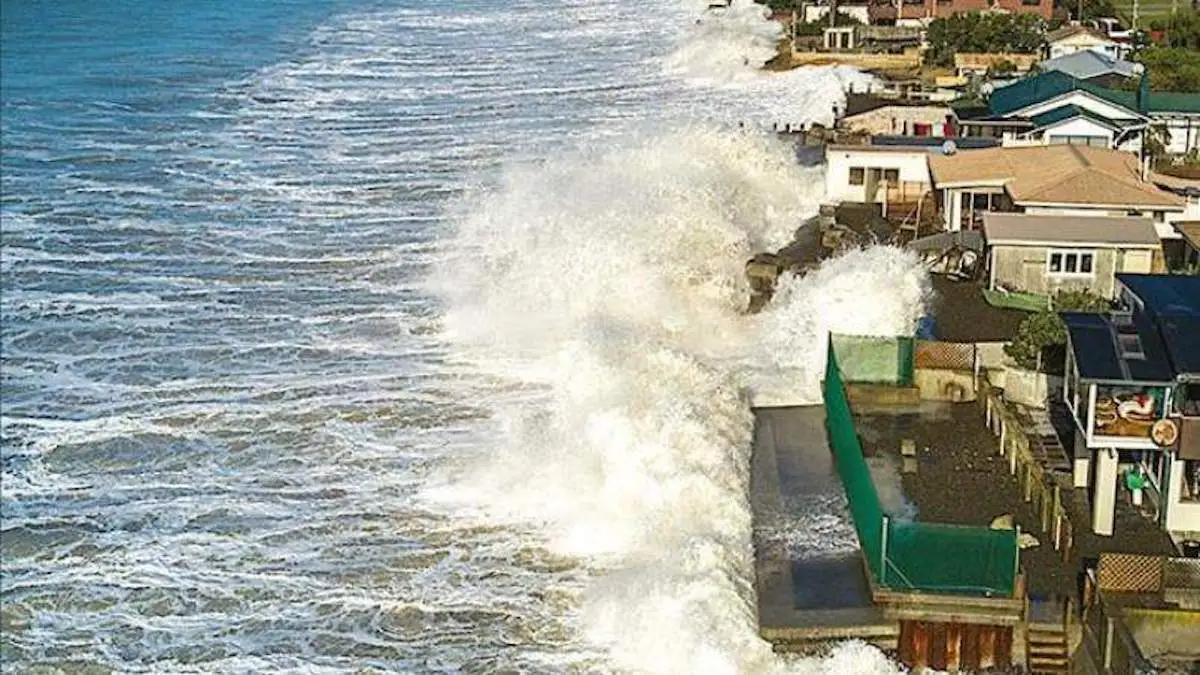
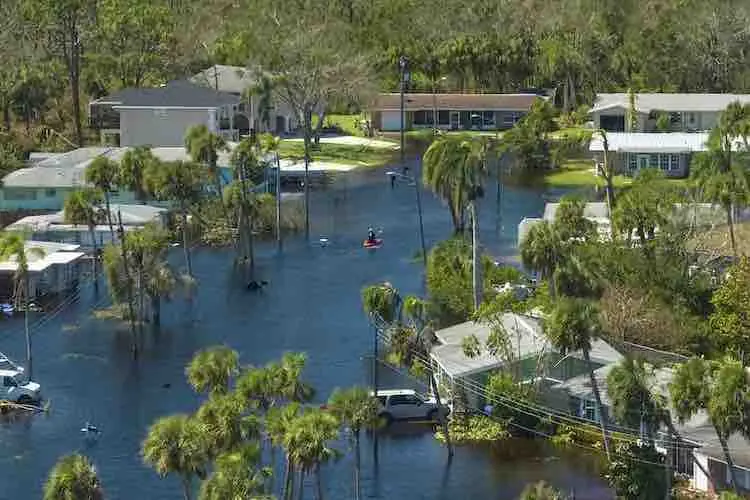
Increasing sea levels become most apparent to residents of coastal cities at times of king tides and extreme weather events. When the tide is very high, rainfall often has nowhere to drain to. Consequently, heavy rain at the same time as a ‘king tide’ will lead to widespread flooding. As a result of rising sea levels, such flooding is becoming an increasing problem in countries around the globe.
Projected sea level rise by 2100
Governments are closely monitoring rising sea levels. Scientific organisations measure and record the rates at which our oceans are rising. For instance NASA provides this data to the public via their Global Climate Change website.
The Global Sea Level Observing System (GLOSS) is a network of tide gauges around the world that was established to monitor global sea level change. Over 70 countries participate in this network. Sea level data is useful for coastal protection during events such as storm surges; providing flood warnings and monitoring tsunamis; tide tables for port operations, fishermen, and recreation; and research into sea level change and ocean circulation. Measurements and forecasts project an average increase in sea levels of 1 metre by 2100.
The Need for Climate Action
Because of the failure of government leaders to significantly reduce the emission of greenhouse gases, certain amounts of sea-level rise are now guaranteed. They are ‘baked into’ the system. However, stronger action on climate change now can mitigate exactly how far our oceans will rise into the future.
The lack of action on climate change has seen the emergence of activist groups around the world. Increasing numbers of people are emerging to protest ‘climate change inaction’. Indeed, many believe we must ‘rise up’ in protest if our coastal cities are to survive rising sea levels.
However, drastic cuts to emissions now could ensure the impacts of sea level rise are minimised, saving some Pacific islands and minimising the impact on other locations with high vulnerability to the sea.

Managing Sea Level Rise
As a result of decades of inaction by corrupt politicians, coastal cities now have to make plans to survive rising sea-levels. These rises are now ‘baked in’ or ‘locked in’ as a result of the failure to cut fossil fuel emissions. Indeed, many coastal cities have prepared ‘retreat or defend’ policies to plan how to handle coming increases in the levels of our oceans.
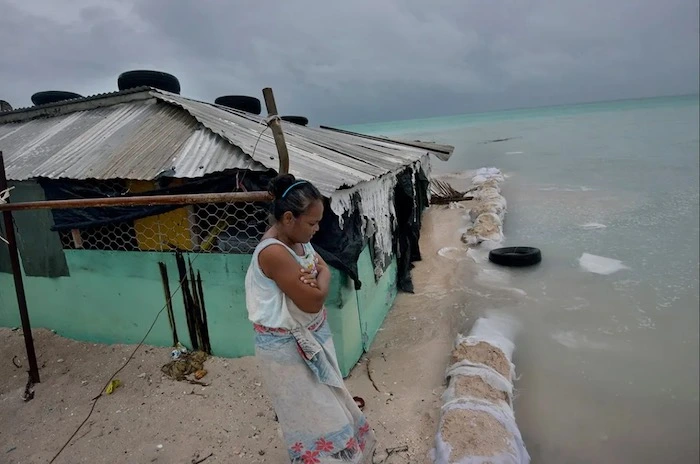
Some countries, such as Indonesia are even moving entire cities to cope with the impacts of climate change. For example, Indonesia is relocating its capital from Jakarta to East Kalimantan. In addition, the Pacific island nation of Kiribati is becoming submerged and the government of that nation has purchased land in Fiji to resettle the nation’s population. Adaptation of the population centres is underway. This includes engineering solutions such as raising houses and roads, installing tidal gates to restrict ingress of tidal water into stormwater systems, building levees and sea walls.
Engineering and Nature Based Solutions
Engineering and nature based solutions to survive sea level rise focus on mitigating its impacts and protecting coastal communities from local sea level rise. This can reduce the risk of flooding. Indeed, here are some key adaptation strategies:
- Sea Walls and Flood Barriers: Constructing barriers to prevent flooding in vulnerable areas. These can be made from concrete, earth, or other materials.
- Dune Reinforcement: Using sand dunes as natural barriers against storm surges and high tides, often reinforced with vegetation or sandbags.
- Elevated Structures: Designing buildings and infrastructure to be elevated above potential flood levels, using pilings or stilts.
- Managed Retreat: Strategically relocating infrastructure and communities away from vulnerable coastal areas, allowing natural processes to reclaim the land.
- Wetland Restoration: Restoring and creating wetlands to act as buffers against storm surges and to absorb excess water.
- Stormwater Management Systems: Improving drainage systems to handle increased rainfall and flooding, including green infrastructure like permeable pavements and rain gardens. This supports coastal ecosystems to combat coastal change.
- Innovative Materials: Using advanced materials that can withstand flooding and erosion, such as geotextiles and resilient concrete.
- Floating Structures: Designing buildings and infrastructure that can float on water, adapting to survive rising sea levels.
- Tidal and Wave Energy: Utilising renewable energy sources from the ocean to power coastal defences and infrastructure.
- Community Planning and Zoning: Implementing policies that restrict development in high-risk areas and promote sustainable land use.
These solutions often require engineering, policymaking, and community engagement to be effective.
Projected Sea Level Rise by 2050
There are a numerous websites and apps that map future levels of sea level rise. Our favourite is the sea-level rise viewer produced by the Office for Coastal Management in the United States. The Climate Council in Australia has also developed an interactive tool that will show how your suburb will be impacted by sea-level rise over coming years. You can see where sea levels will be in 2050 or any year you input.
Sea Level Rise Map
Scientists have highly sophisticated software to predict various sea level rise scenarios based on estimated greenhouse gas emissions. Their work takes into account regional variations and emerging trends, such as the more rapid melting of the ice sheet covering West Antarctica.
Sea level rise in Australia (and across planet earth), will overwhelmingly impact coastal areas, most noticeably on the east coast. The below map shows the devastating effect it will have on a number of Sydney suburbs by 2100. While the areas marked will be permanently submerged, nearby suburbs will also be inundated regularly.

Effects of Rising Sea Levels on Humans
Rising sea levels due to climate change pose significant threats to coastal nation’s, particularly low-lying island countries and densely populated delta regions. So, here are the five countries most at-risk from rising sea levels, based on vulnerability, population exposure, and economic impact:
- Maldives
Risk: Highest percentage of land area at risk (80% of islands <1 m above sea level). Threats: Complete inundation possible by 2100, threatening tourism and freshwater supplies. - Tuvalu
Risk: Average elevation ~2 m, with saltwater intrusion destroying crops. Threats: Plans to relocate population as the nation could become uninhabitable. - Kiribati
Risk: Spread across 33 atolls, most land <3 m above sea level. Threats: Government has purchased land in Fiji for potential relocation. - Marshall Islands
Risk: Average elevation ~2 m, facing frequent flooding. Threats: Critical infrastructure at risk, including airports and homes. - Bangladesh
Risk: 17% of land could be submerged by 1 m rise, displacing ~20 million. Threats: Dense population in vulnerable delta regions (Ganges-Brahmaputra).
Key Factors Increasing Risk:
- Low Elevation: Small Island States (Maldives, Kiribati) face existential threats.
- Dense Coastal Populations: Bangladesh, Vietnam, and Egypt have millions at risk.
- Economic Dependence on Coastlines: Tourism (Maldives) and agriculture (Vietnam, Egypt) are vulnerable.
- Sinking cities (Jakarta, Bangkok, Miami) face compounding risks from subsidence.
The fact the countries listed are experiencing massive coastal hazards, despite having no history of producing significant greenhouse gas emissions raises real issues of environmental justice.
Sea Level Rise Causes
We have considered greenhouse emissions and the way they cause the heating of our planet. The consequential melting of ice across the globe is the biggest cause of rising sea levels.
Melting ice shelves in the Antarctic, and meltwater from Greenland and other ice covered land masses is causing an increase in the relative sea level. Sea levels in Australia are rising in line with global trends and are expected to continue increasing throughout the 21st century and beyond. This is relevant if we are to survive rising sea. Data from tidal gauges and satellite measurements show an average rise of 2.1 mm per year over the last 50 years, with the rate accelerating in recent decades. Rising sea levels are driven by two major factors:
- Thermal expansion (ocean water expanding as it warms).
- Melting ice sheets and glaciers, particularly in Antarctica.
Both processes are intensifying, making it harder for coastal communities to survive sea level rise over time.
As levels rise communities must deal with significant coastal changes, including coastal erosion, the loss of beaches, and the bleaching of coral reefs such as the Great Barrier Reef.